

Commercial
Stone refurbishment scaffolding on Dunblane High Street
Scaffolding a sandstone terrace on Dunblane High Street for stone cleaning and repointing — with the shops still trading and the pavement still open underneath.
A terrace of traditional sandstone buildings on Dunblane High Street needed its stonework brought back: cleaning, raking out and repointing, and repair to the weathered masonry around the windows and the wallhead. The complication was not the stone. It was everything happening underneath it.
A working high street, not a building site
The ground floor of this terrace is shops — a hairdresser, a gift shop, a pharmacy — all trading, all with customers coming and going through the working day. Above them are flats with people living in them. The street itself is narrow, with parking on both sides and a pavement barely wide enough for two people to pass.
None of that stops for stonework. So the scaffold had to do three things at once: carry the masons and their materials the full height of the elevation, leave every shop door and window clear, and keep the footway open and safe for anyone walking past.
What we built
We designed and erected an independent tied access scaffold across the full run of the terrace, standing on a gantry over the pavement.
The standards land at the kerb and tight against the building line, clear of the shop entrances. A beamed and boarded gantry bridges across above head height, so the first working lift starts above the shopfronts and the pavement continues to run underneath it. From there the scaffold rises in boarded lifts to the wallhead and the chimney heads, giving the masons a full-width platform at every level they need to reach.
Because the building is traditional sandstone, the ties were planned around the masonry rather than driven wherever was convenient — into joints and openings that could take them, and made good afterwards.
Keeping the dust where it belongs
Stone cleaning and repointing make a mess. Raking out old lime mortar produces a steady fall of grit and dust, and cleaning throws spray.
The whole elevation was wrapped in debris netting, which catches anything leaving the working lifts before it reaches the street. On the decks themselves we laid protective sheeting along the boards, so the spoil raked from the joints collects on the sheet and gets swept and bagged rather than finding its way through the board gaps onto the shop awnings and windows below.
Access, edges and handover
Every lift is boarded out with double guardrails and toe boards, and the lifts are linked by internal ladder runs with self-closing gates — so there is no climbing the outside of the frame and no open hatch left behind anyone.
Before anyone used it, the scaffold was handed over with a tag at the access point showing it had been inspected and was fit for use. After that it was re-inspected at intervals of no more than seven days for as long as it stood, and again after high winds, with each inspection recorded.
The result
The masons got a safe, full-height working platform across the whole terrace. The shops kept their doors open and their windows visible for the duration. The pavement stayed open, lit and signed. And the stone dust stayed on the scaffold instead of on the High Street.
If you are planning stonework, roof repairs or a full refurbishment on a building with something live underneath it — shops, offices, a public footway — that is the kind of problem worth talking through before the scaffold is priced, not after.
Services used on this job
From site
Photographs from the job
-
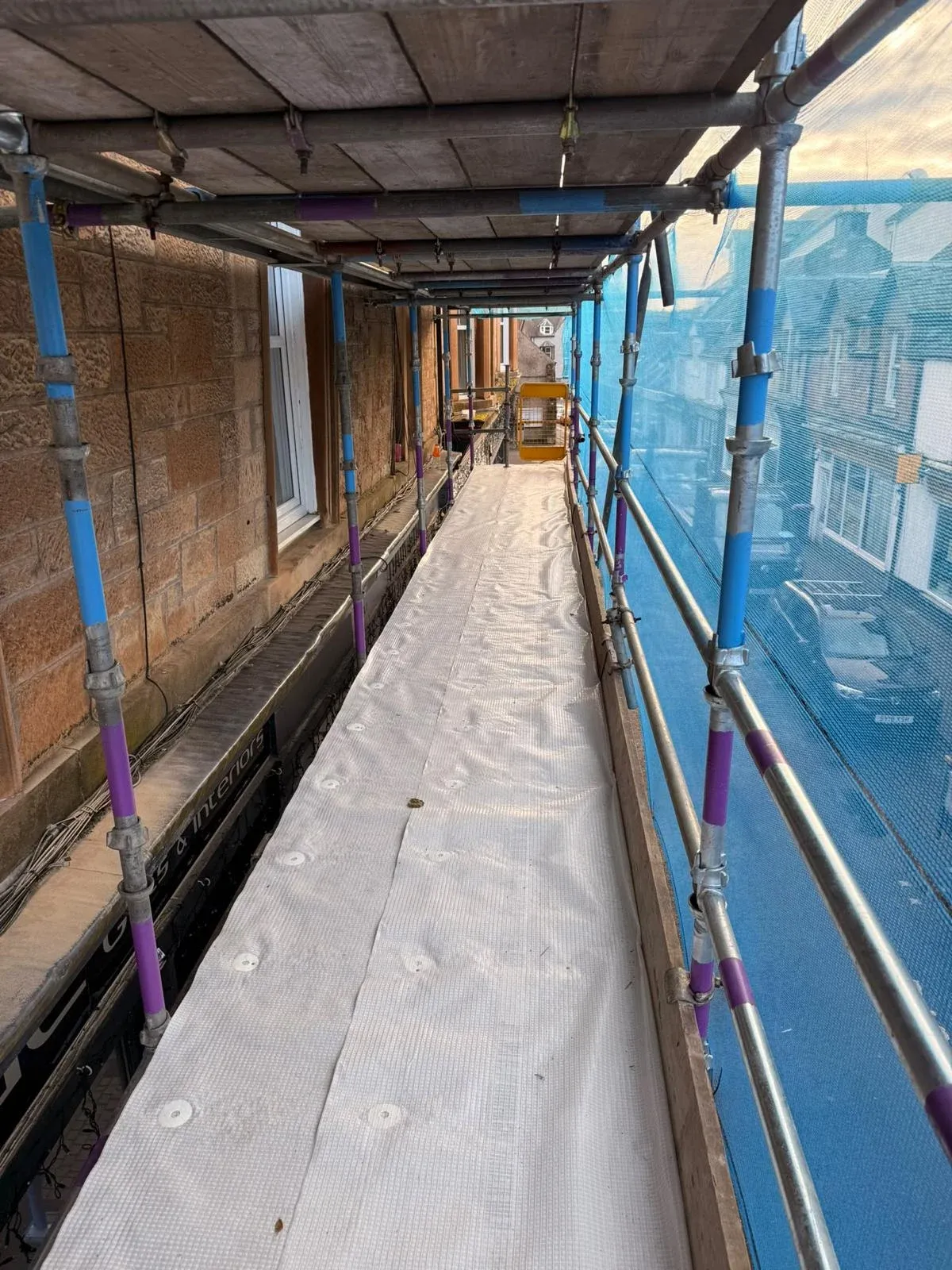
Sheeting laid along the decks catches stone dust and spoil before it can reach the shopfronts below.
-
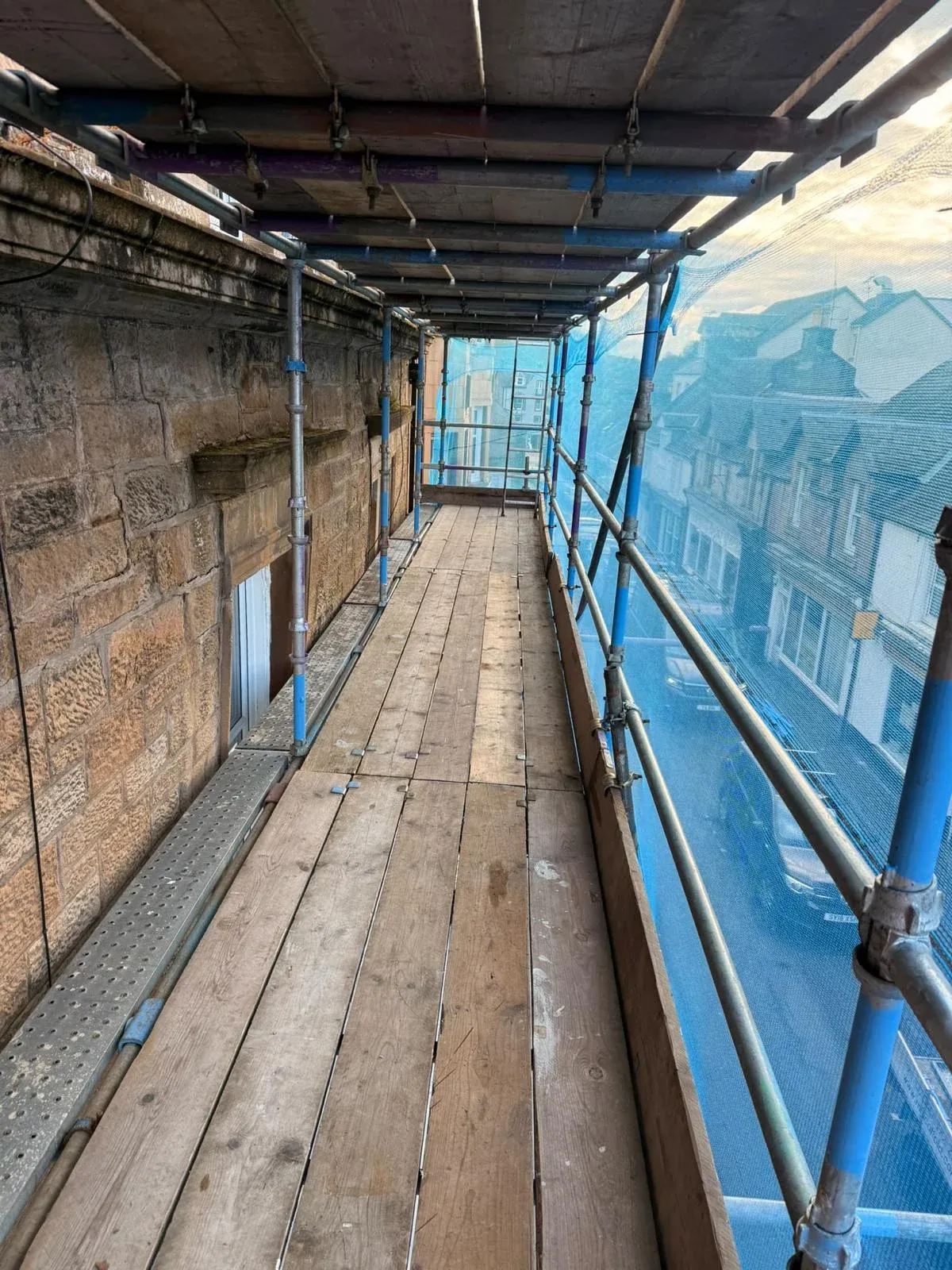
A full-width working lift puts the stonemasons within arm’s reach of every joint and cill.
-
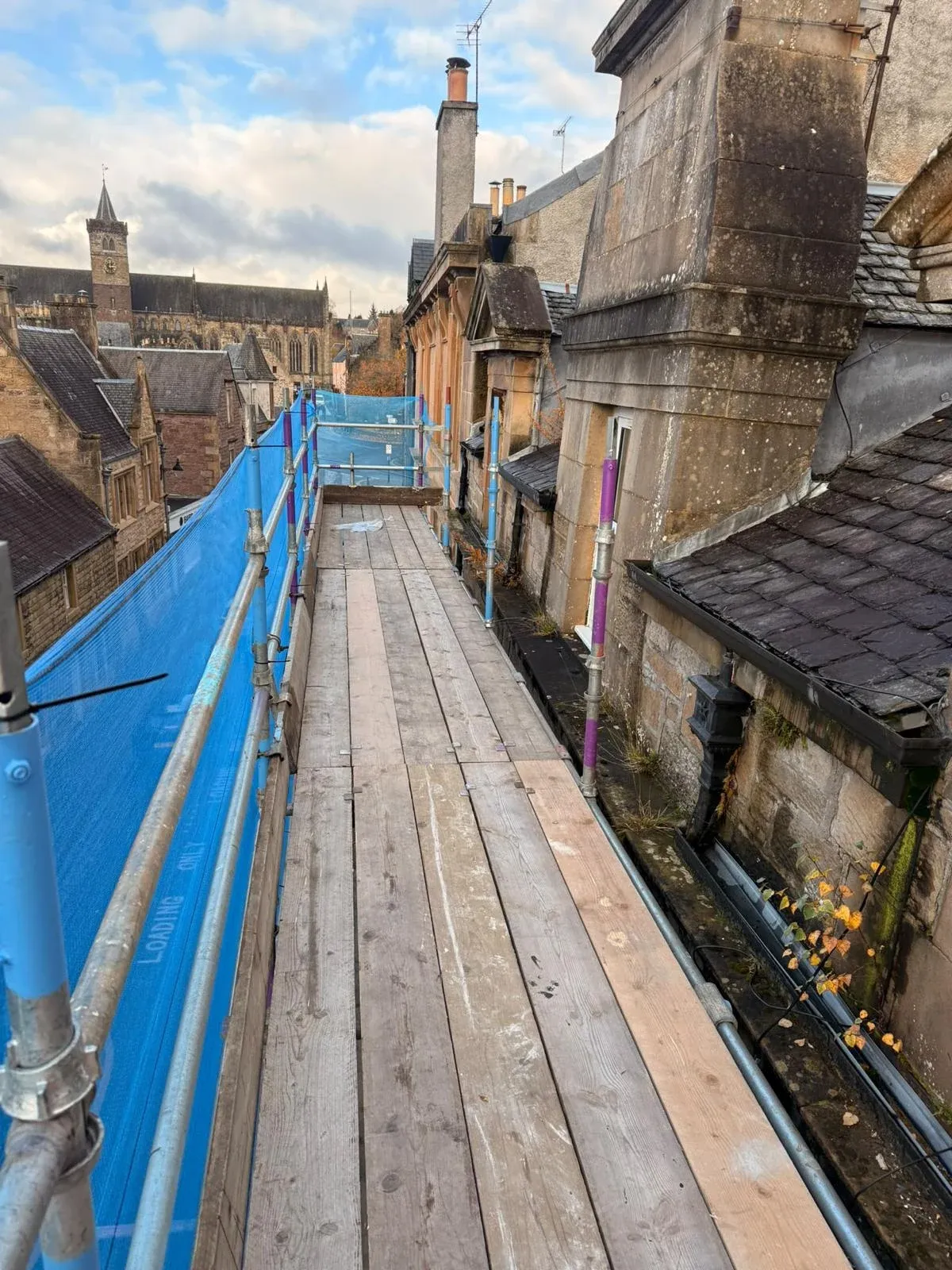
The top lift reaches the wallhead and chimney heads, with Dunblane Cathedral beyond.
Good to know
Questions about jobs like this
Can shops stay open while scaffolding is up?
Yes. On a high street the scaffold is normally built as a gantry: the standards land at the kerb and in the channel between shopfronts, and a boarded deck bridges over the pavement and the shop doors. Customers walk underneath on the footway as usual, and the shop windows stay visible. It needs planning before anything is erected, because the position of every standard has to miss doorways, windows and cellar hatches.
Do you need a licence to put scaffolding on a pavement?
Yes. Any scaffold that stands on or over a public footway or road needs a permit from the local roads authority — in Dunblane that is Stirling Council. The licence covers the footprint, the duration, lighting and signing, and the public liability insurance behind it. We arrange the licence and the traffic management as part of the job.
How do you stop stone dust going everywhere during cleaning and repointing?
Two layers. Debris netting across the whole elevation catches spray, grit and anything dropped, and keeps it off the street. Protective sheeting laid along the working decks catches the spoil raked out of the joints, so it can be swept up and bagged at the end of each lift rather than washing down onto the shopfronts.
How often does a scaffold like this have to be inspected?
Under the Work at Height Regulations 2005, a scaffold must be inspected by a competent person before it is first used, at intervals of no more than seven days after that, and again after anything that could affect its stability — high winds, an impact, or any alteration. Each inspection is recorded and the scaffold carries a tag showing its current status.
Get started
Planning something similar? Talk to us
Tell us about the building, the work and the timings, and our team will come back to you with a clear, competitive price — no hidden costs.